CONA Services

CONA Services – Enterprise Product Design Contributions

Duration:

April – December 2025

Role:

UI/UX Product Designer

Platform: 

Enterprise B2B Web/Mobile Application


Contributions:

User Flow Mapping
Information Architecture
Wireframing & High-Fidelity Prototyping
Interaction & Logic Design
Stakeholder & Engineering Collaboration

About CONA Services:

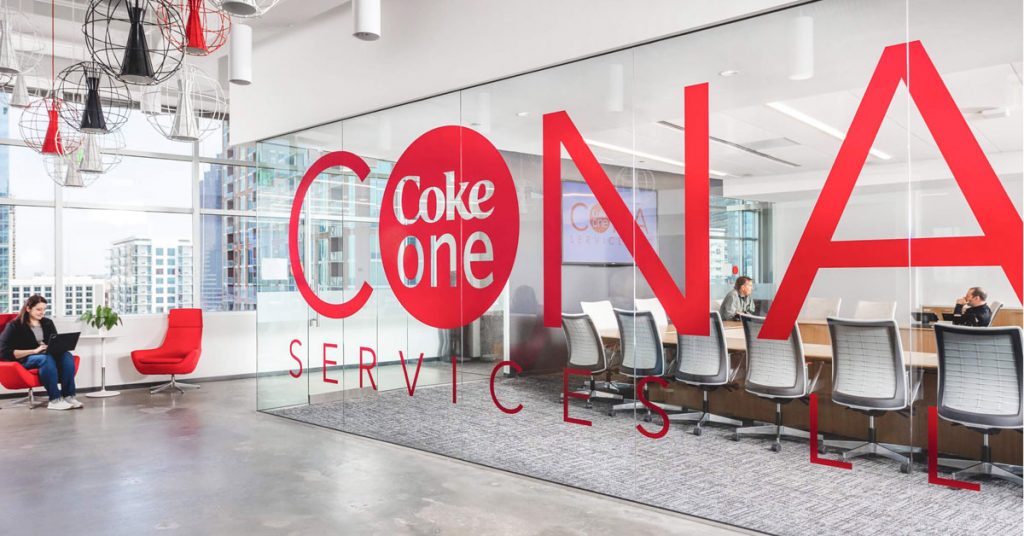
CONA Services is an IT Platform for the North American Coca-Cola Bottling business. It provides our participating Bottlers a common set of processes, data standards, manufacturing and customer solutions. They provide services to their Bottlers that enable a superior customer experience and digital business innovation.

Overview

During my time at CONA Services, I worked on multiple UX initiatives within a high-volume B2B beverage ordering platform used by distributors managing extensive product catalogs and inventory constraints. My focus was on improving product discovery, cart workflows, and decision-making clarity within a system supporting 200+ SKUs per ordering cycle.

Rather than a full system redesign, my work centered on targeted enhancements that addressed usability friction, complex filtering logic, and inventory-aware interactions. I collaborated closely with product and engineering teams to design scalable solutions that aligned with operational constraints and real-world ordering behaviors.

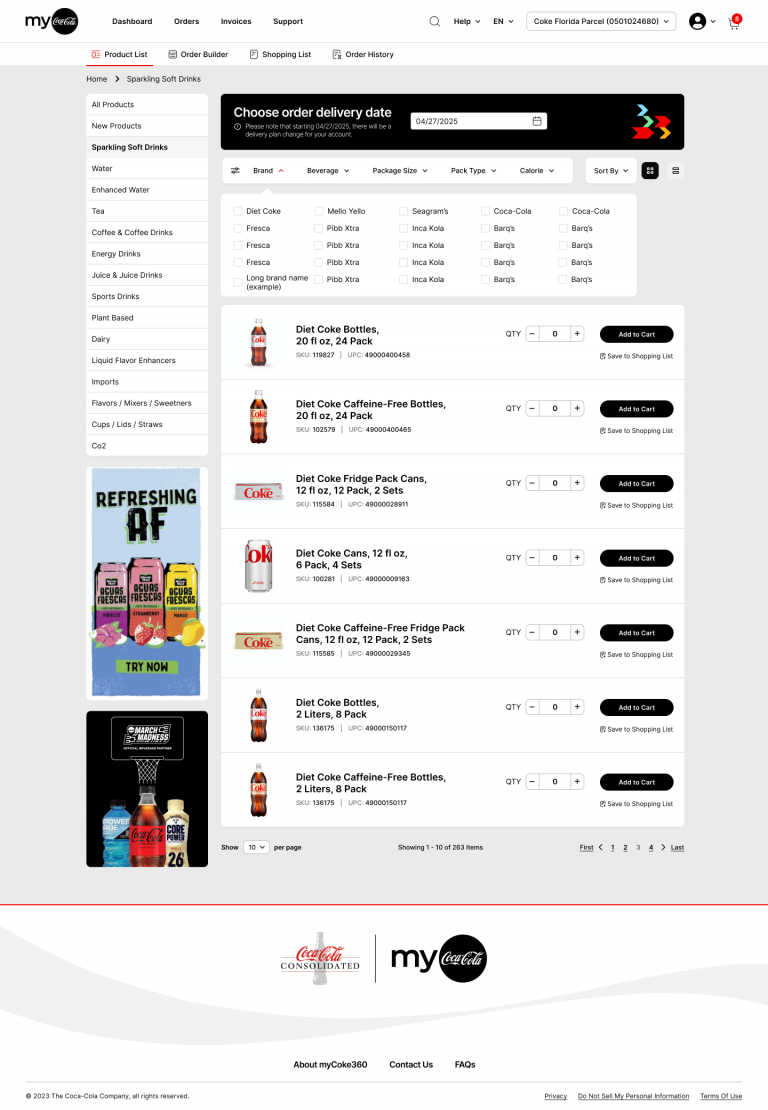
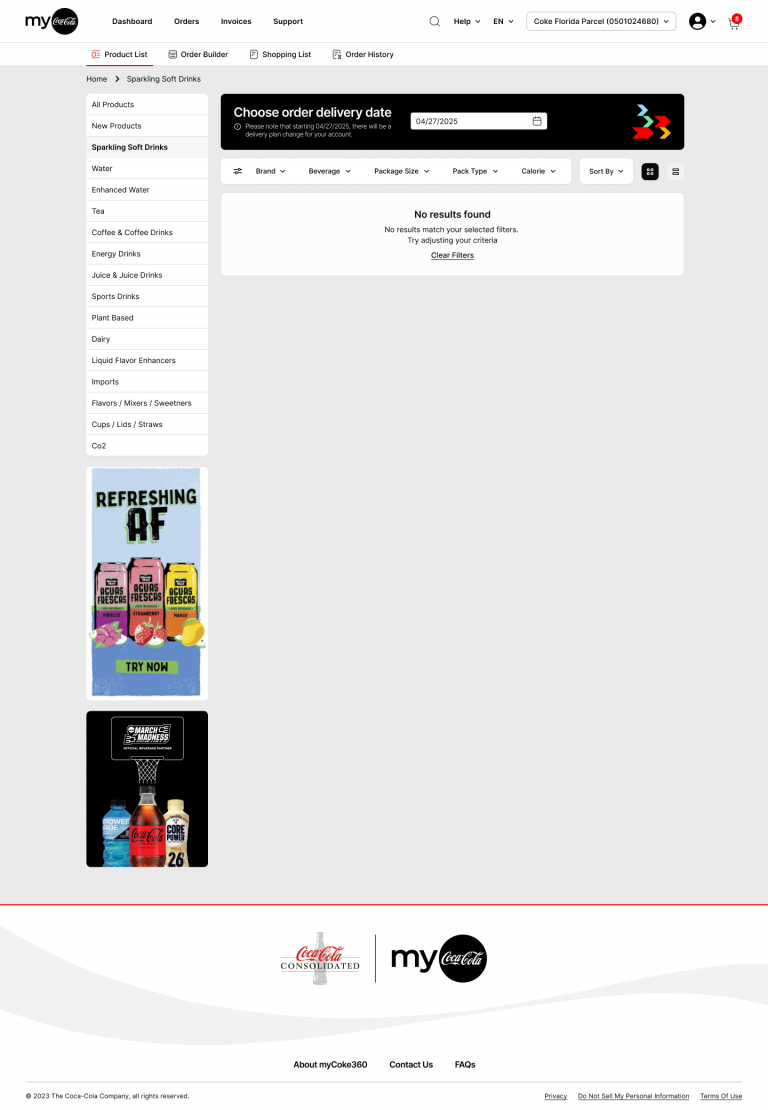
Sort and Filtering Feature

Enhanced product discovery through scalable sort and filter logic within a high-SKU enterprise ordering environment.

Solution: 

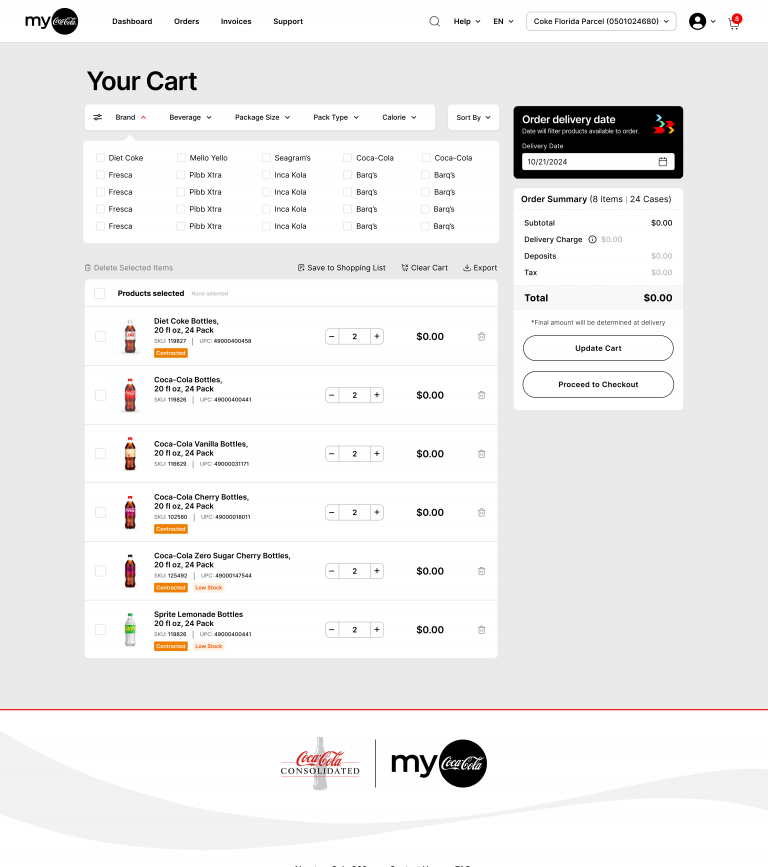
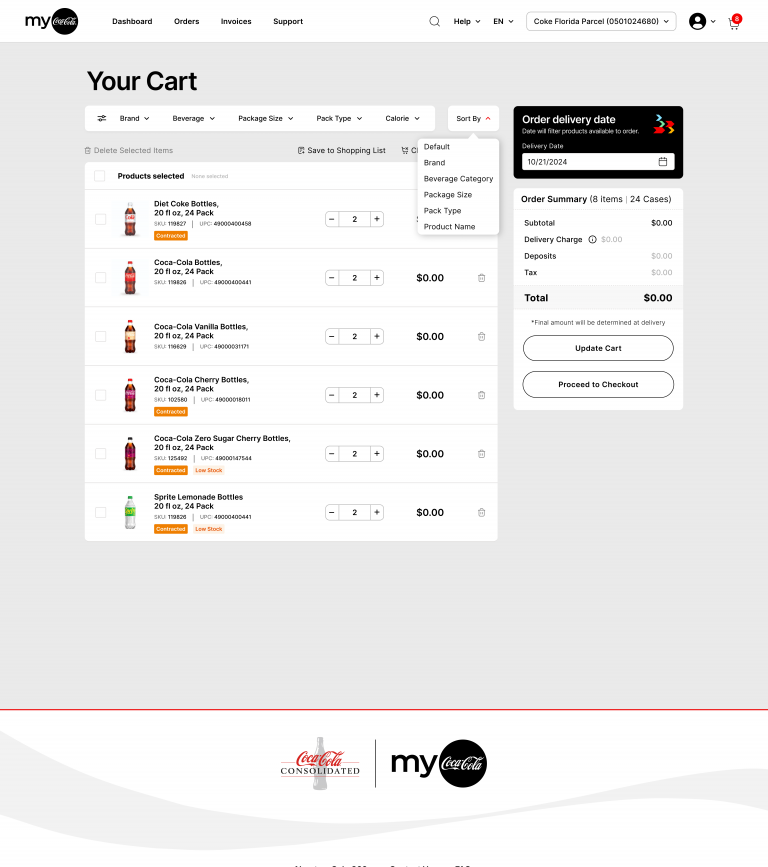
Introduced a scalable sort and filter system to improve product discoverability across a high-SKU enterprise catalog, ensuring consistent behavior between product listing and cart workflows.

Key Decisions:

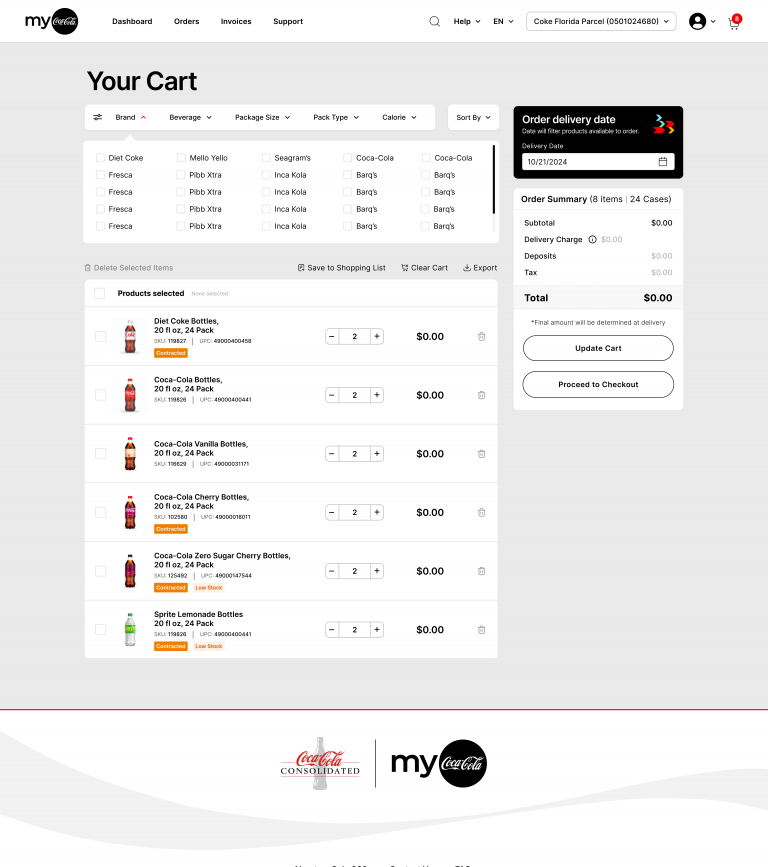
  • Structured filters by product attributes (brand, package type, calorie, pack size) to reflect real distributor mental models

  • Designed multi-select dropdown behavior to support bulk ordering scenarios

  • Ensured sorting logic aligned with operational priorities, not just alphabetical defaults

  • Maintained consistency between Product List and Cart to reduce workflow disruption

  • Accounted for inventory and delivery-date dependencies to prevent ordering conflicts


Wireframes:

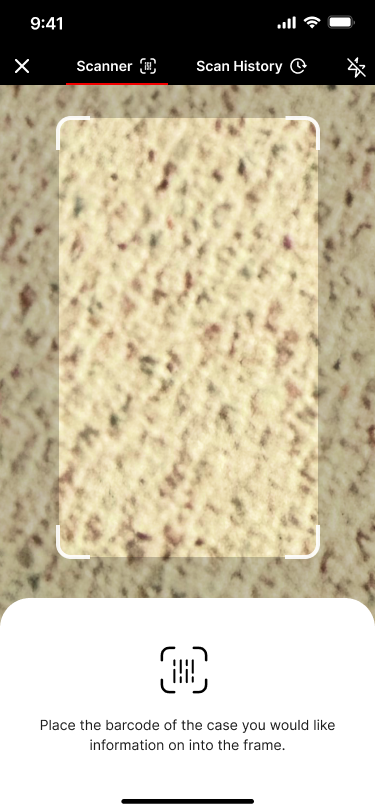
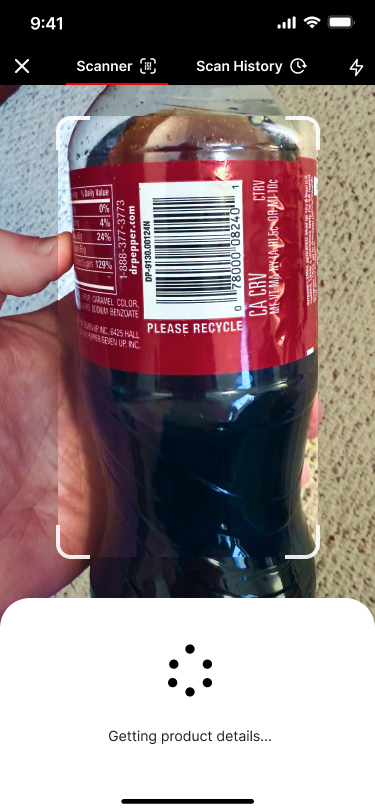
Mobile Barcode Scanning Feature

Designed a mobile barcode scanning workflow to streamline product lookup and reduce friction in field-based ordering.

Solution:

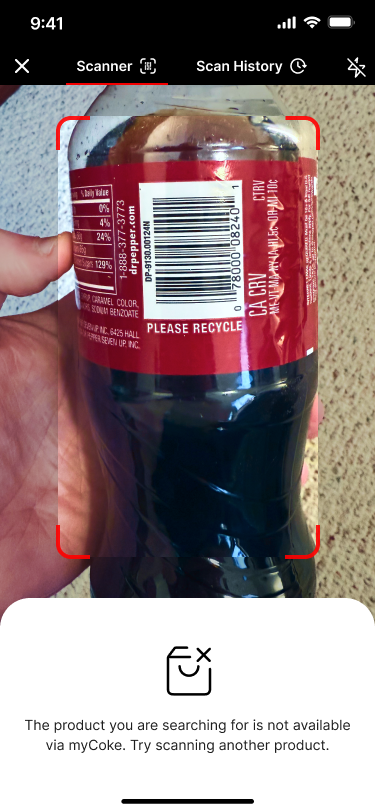
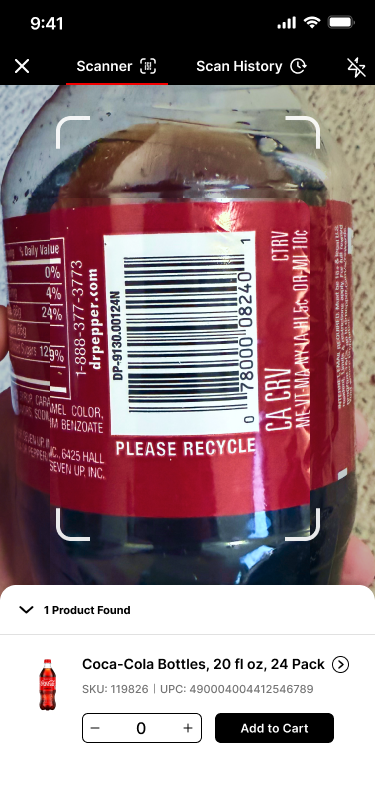
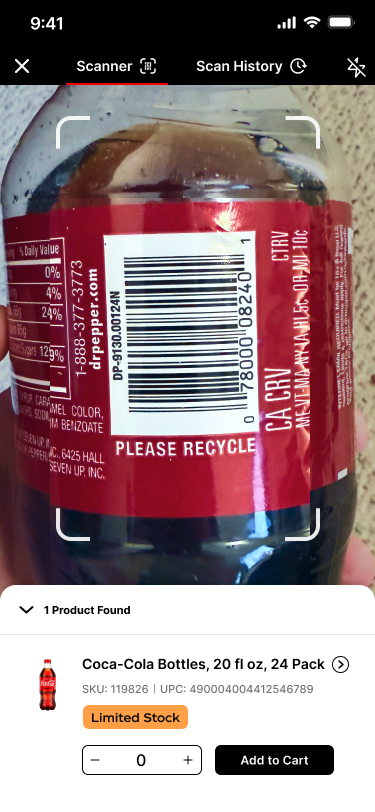
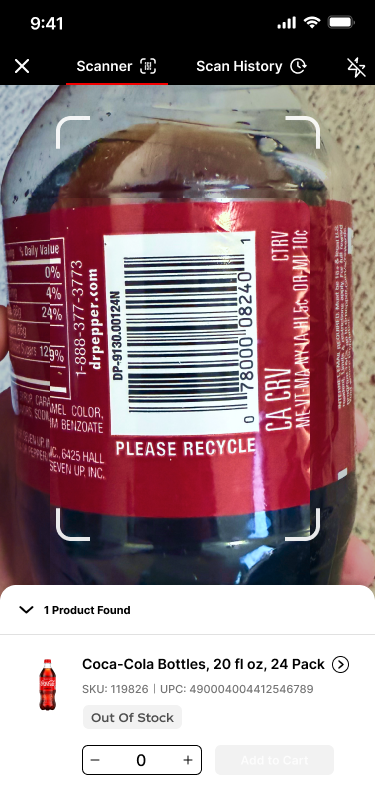
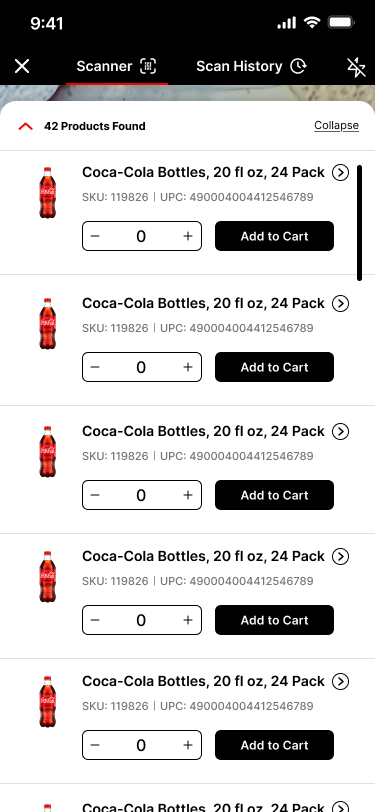
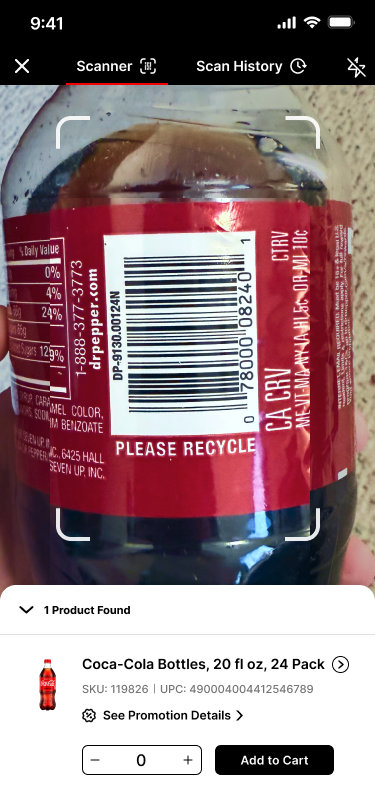
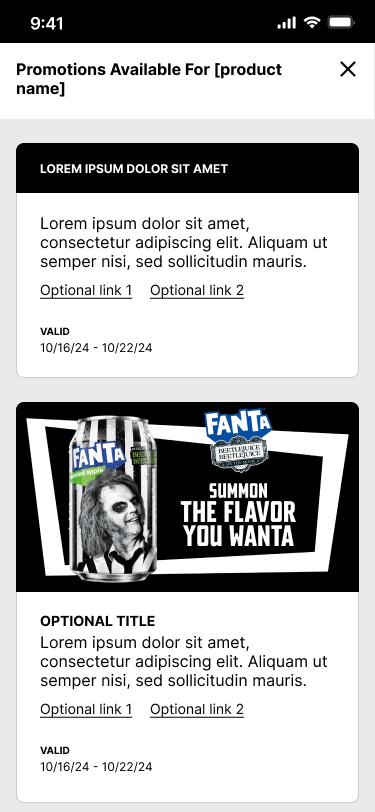
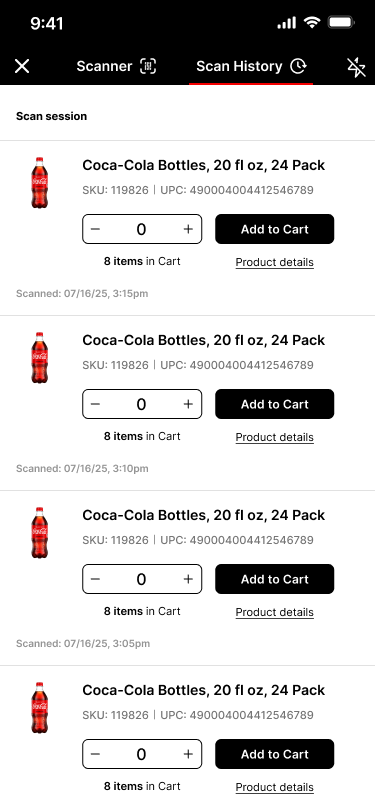
Designed a mobile barcode scanning feature that allows distributors to instantly retrieve product details, inventory status, and promotions directly from physical cases. The experience includes real-time scan feedback, scan history tracking, and seamless add-to-cart functionality to support fast, high-volume ordering in the field.

Key Decisions:

  • Designed real-time visual scan states (loading, success, unavailable) to provide immediate feedback and reduce uncertainty

  • Incorporated inventory-aware messaging (Out of Stock, Limited Stock) to prevent ordering errors

  • Integrated promotional visibility directly within scan results to support decision-making at the moment of interaction

  • Introduced scan history to minimize repeat scans and support bulk workflows

  • Ensured one-handed usability and minimal modal interruptions for in-field efficiency

Next Best Skew: Design Challenge

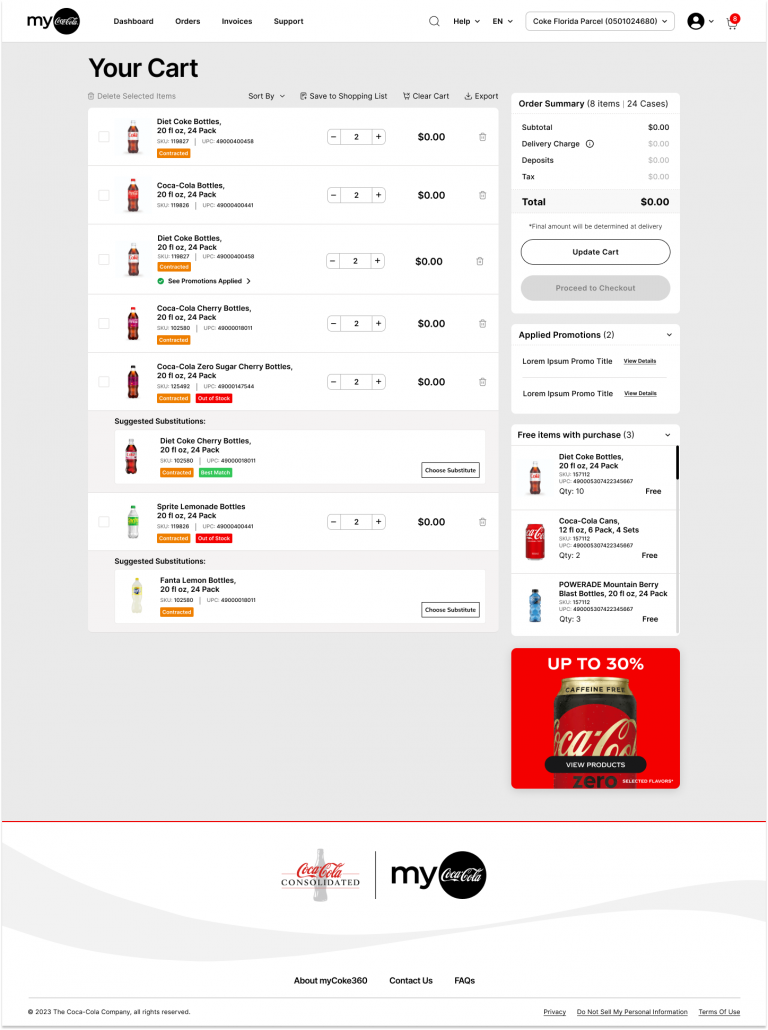
Designed an incentivized “Next Best SKU” substitution experience to reduce cart friction when products are out of stock.

Solution:

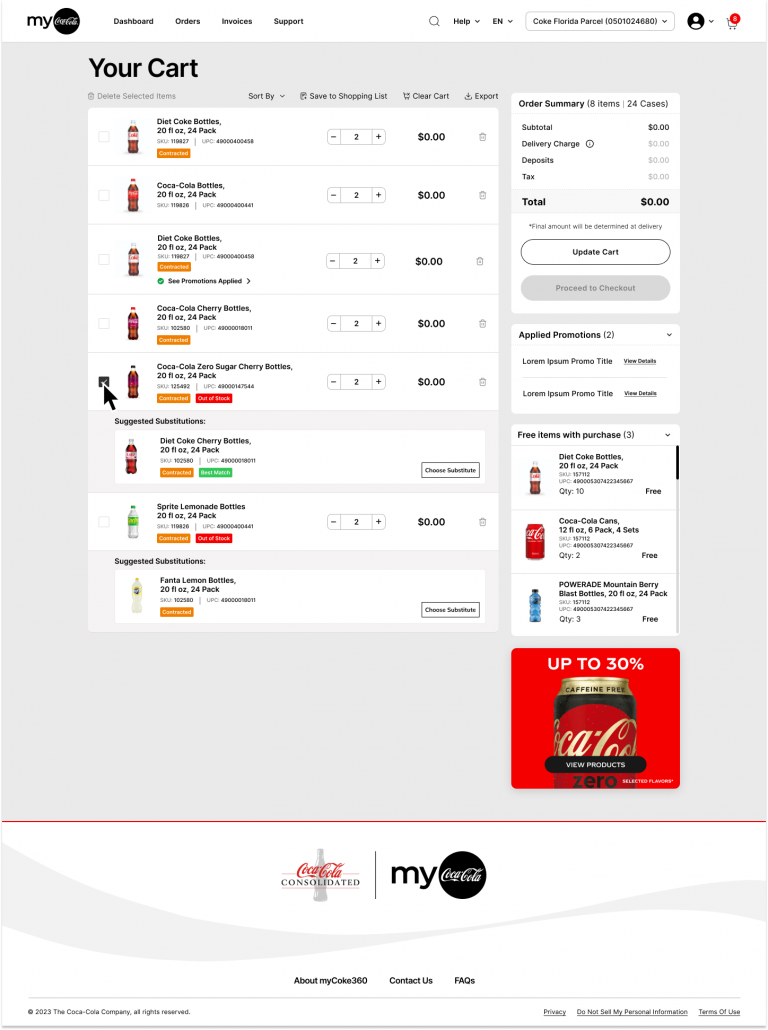
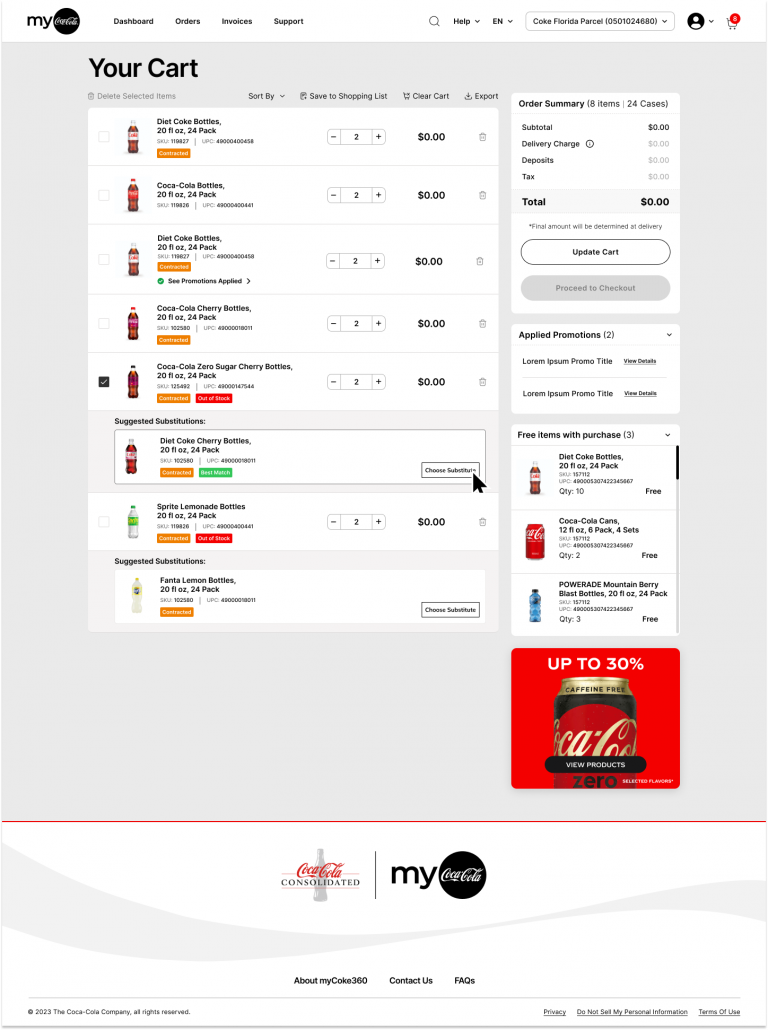
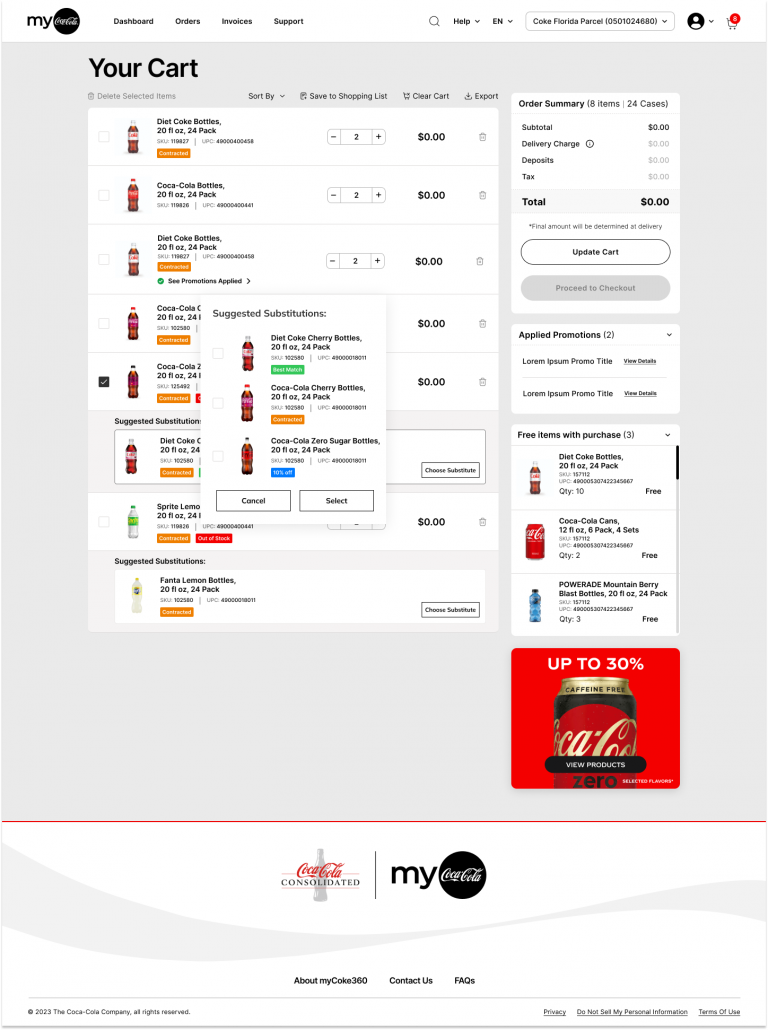
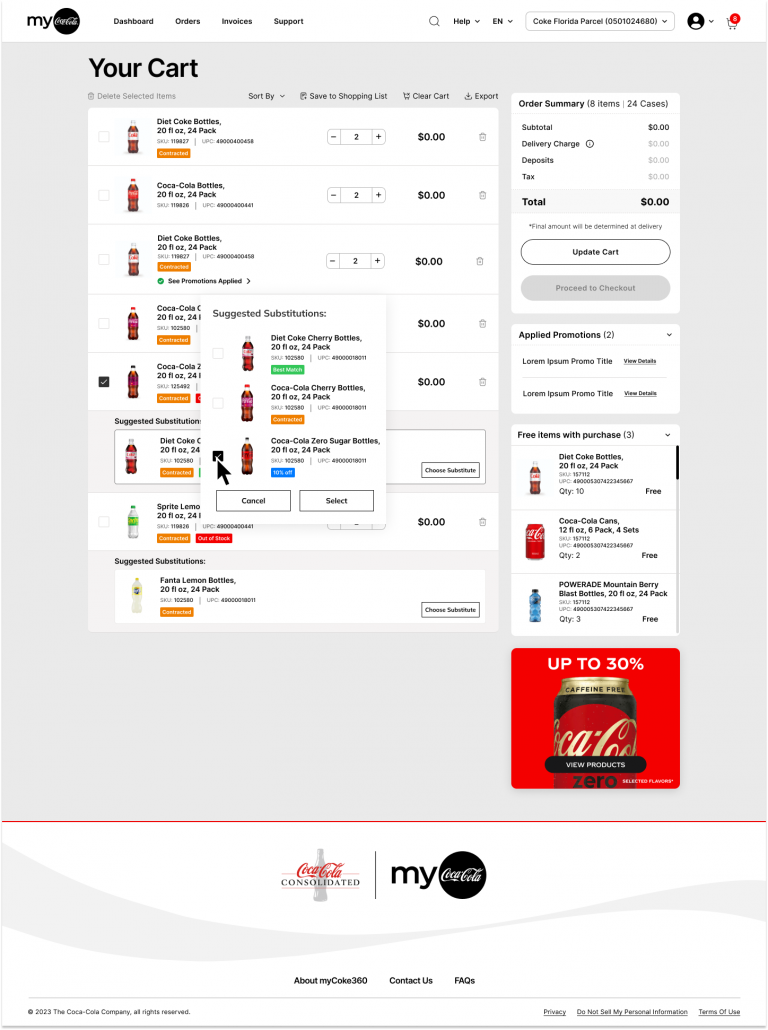
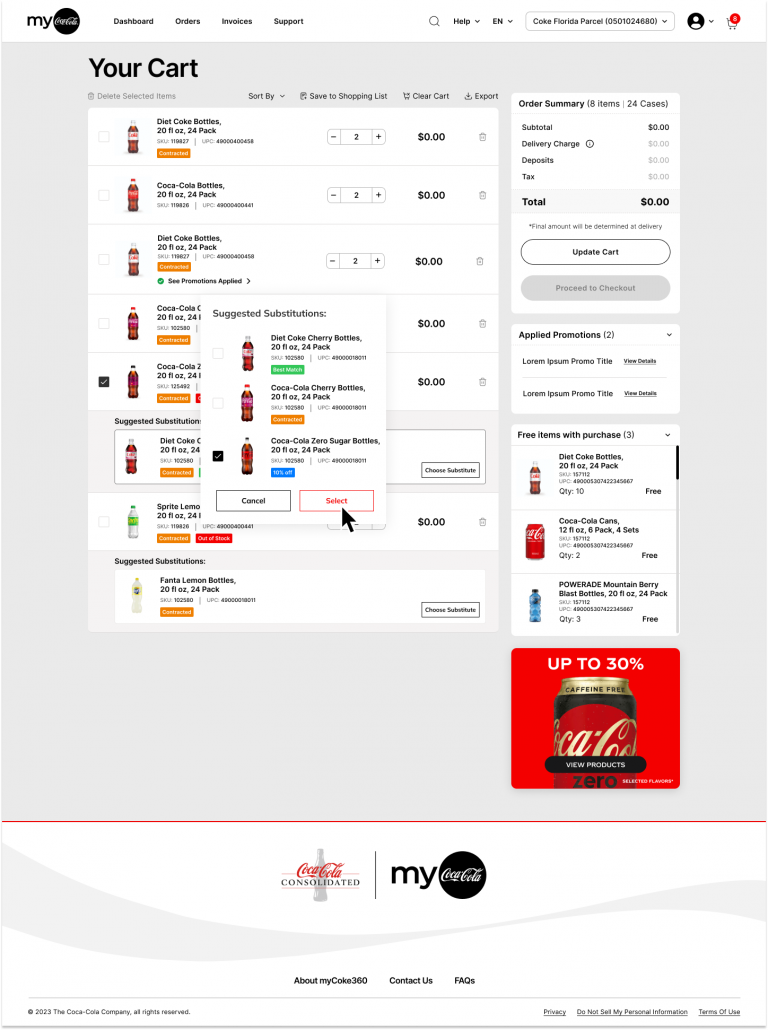
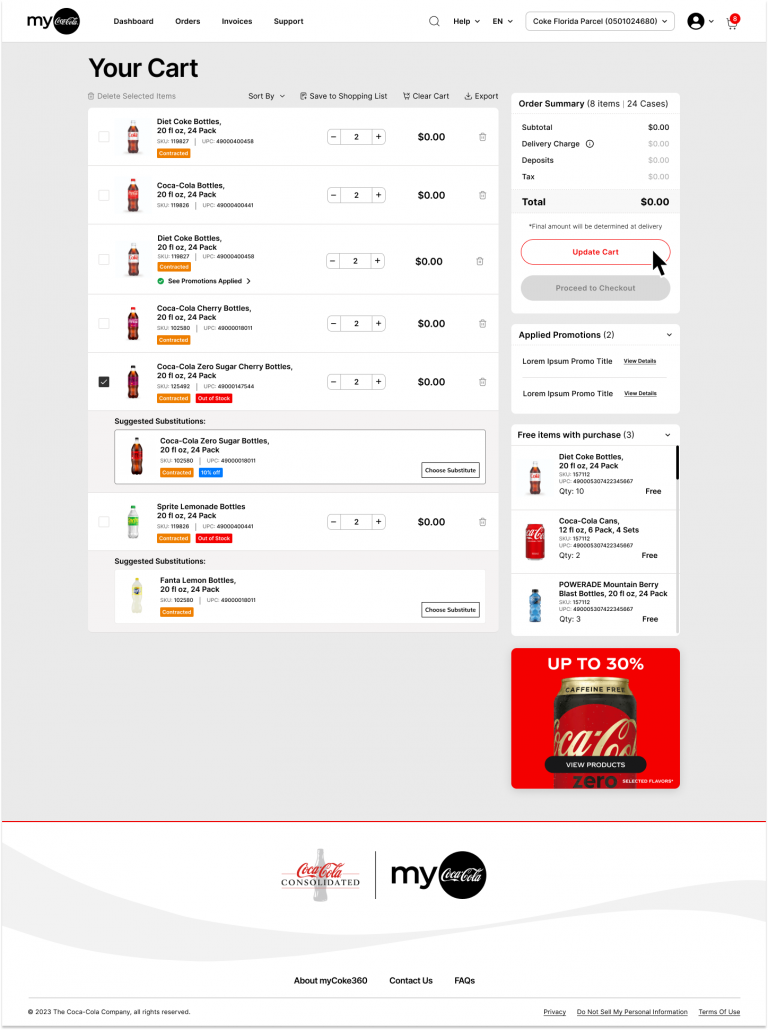
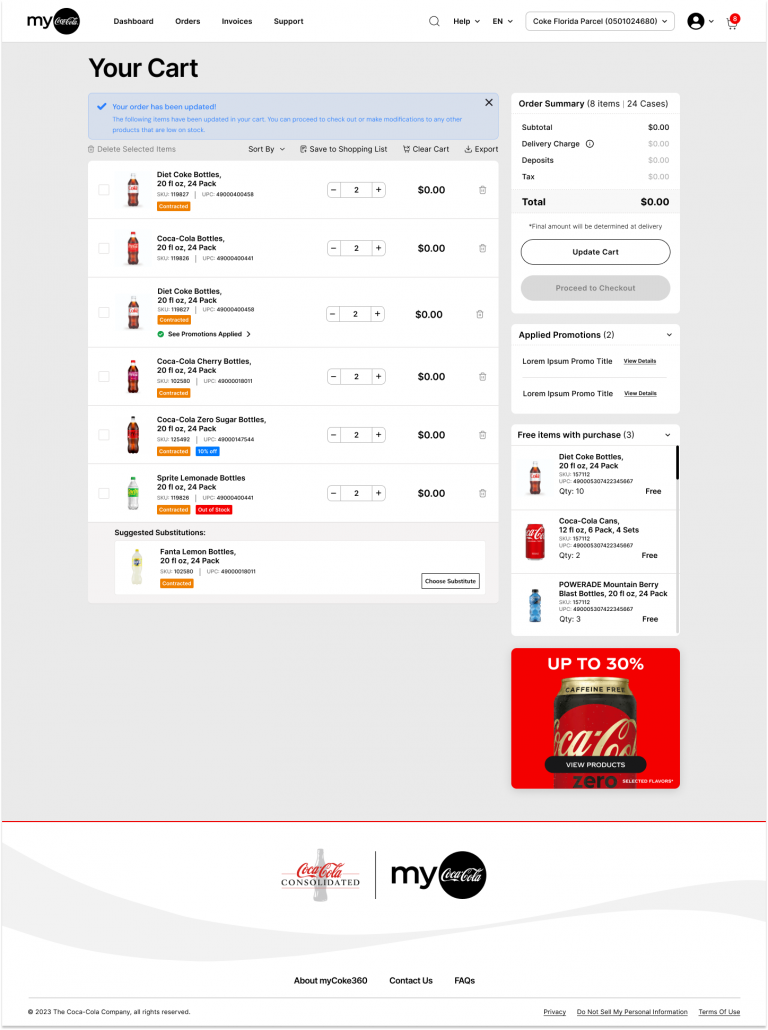
During this design challenge, I was asked to create a guided, in-cart substitution experience that surfaces tailored “Next Best SKU” recommendations when products are out of stock. The proposed solution presents contextual incentives such as “Best Match” and percentage discounts to encourage confident switching, while using a streamlined modal interaction to keep users within their ordering workflow. A confirmation banner reinforces successful updates, reducing uncertainty and maintaining checkout momentum.

Given a two-day timeline, I developed four distinct concept variations before selecting one for submission. While only one direction was required, exploring multiple approaches allowed me to evaluate different interaction models and demonstrate strategic thinking in addressing inventory-driven friction.

Key Decisions:

  • Positioned substitute suggestions directly beneath out-of-stock items to maintain cart context

  • Used visual badges (Best Match, Contracted, 10% Off) to support fast decision-making

  • Designed a lightweight selection modal to prevent full-page navigation and preserve workflow momentum

  • Reinforced substitution confidence with a post-update confirmation banner

  • Balanced promotional incentives with operational logic to avoid overwhelming users

See the rest of the variations

Click the button below to view all the variations from the design challenge that I had put together in a span of 2 days. This figma link includes my main solution, along with the 3 other solutions I had come up with as I was working on the design challenge. 

Enterprise Product Impact & Growth

My time at CONA Services allowed me to design within a live, high-volume enterprise ecosystem where operational constraints, regional variability, and inventory logic directly shaped user experience decisions. From improving product discovery through scalable filtering systems, to streamlining mobile barcode workflows in the field, to conceptualizing intelligent SKU substitution models under time constraints, each initiative required balancing usability with business and technical realities.

Working across web and mobile surfaces strengthened my ability to design decision-support systems that reduce friction without disrupting workflow momentum. It also reinforced the importance of cross-functional collaboration, as UX solutions needed to align with engineering feasibility, product strategy, and bottler-region requirements.

Collectively, this experience demonstrates my ability to operate within complex enterprise environments, deliver thoughtful interaction design under constraints, and approach product challenges with both strategic exploration and execution-focused rigor.